ServicesRoof Replacement
Roof Replacement in Palatka, Explained Before We Start
A worn-out roof gets replaced down to the bare deck: old layers off, soft wood swapped out, then new underlayment, flashing and shingles installed to the Florida Building Code. Before any work begins, you get a written estimate naming the cause, the cost drivers and your options.
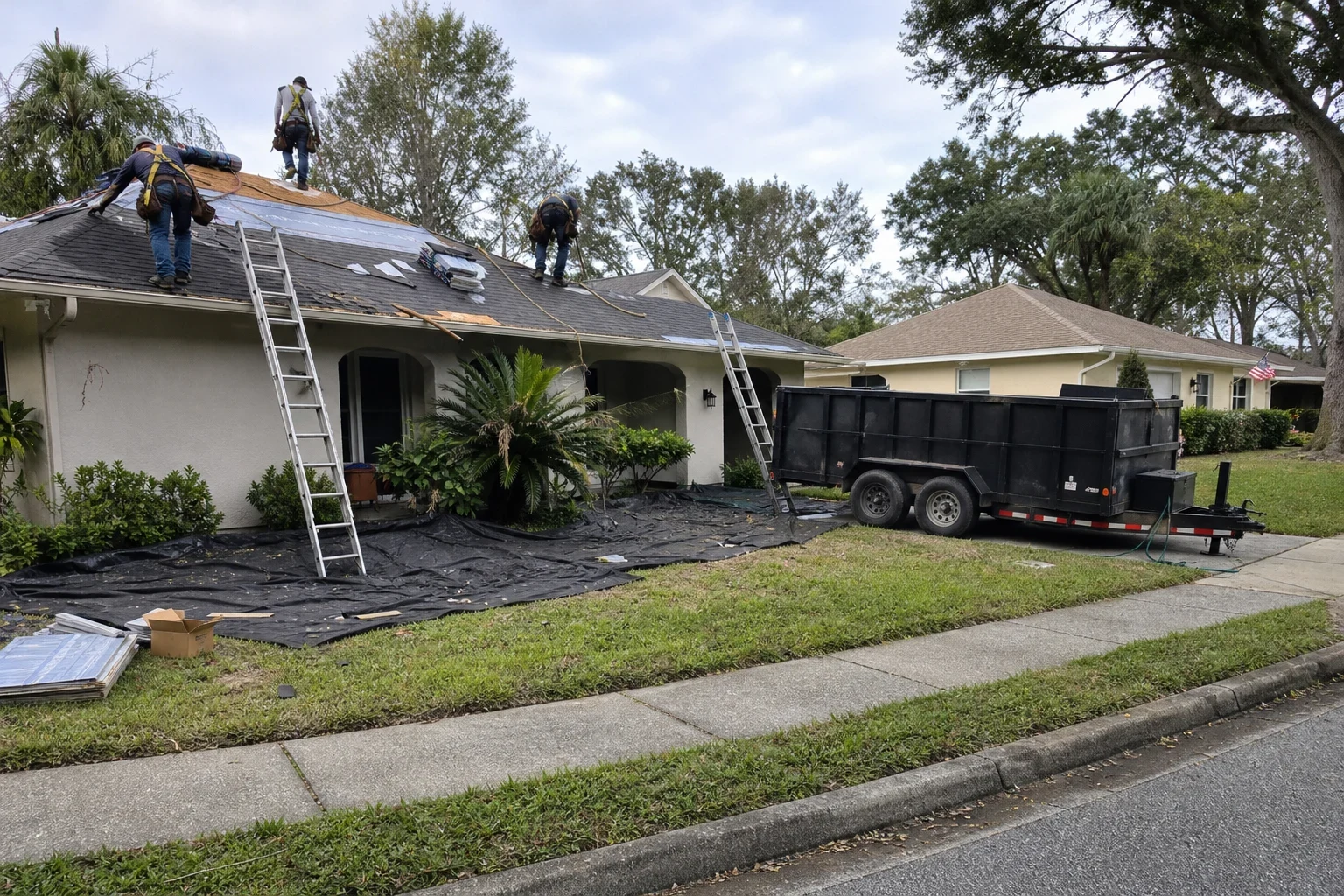
When a New Roof Makes More Sense Than a Patch
A single leak rarely justifies a whole new roof. Damage confined to one slope, a handful of blown-off shingles or a split pipe boot is usually a job for roof repair, and we will tell you so on the spot. Replacement starts to pay off when wear shows across every slope, when the decking has softened in several places, or when each patch is followed by a failure somewhere else.
A replacement is also the chance to correct what the old roof got wrong. We often find thin felt underlayment, no drip edge, attics that cannot breathe, and flashing that was smeared with caulk instead of properly set. All of that gets done right on the new roof, whether your home is in Palatka or nearby in Green Cove Springs or Palm Coast.
As a licensed general contractor, we pull the permit ourselves and schedule the inspections the local building department requires. You do not have to chase paperwork.
What Goes Into Your New Roof
Down to the bare deck
Every old layer comes off, not just the top one. Stripping the roof completely is the only way to see the wood your new roof will be fastened to.
Deck repair and re-nailing
Soft, stained or delaminated plywood is cut out and replaced. Where code calls for it, we re-nail the sheathing with ring-shank nails so the deck holds against wind uplift.
Underlayment that keeps water out
Synthetic underlayment goes over the whole deck, with self-adhered membrane in the valleys and along roof-to-wall joints. If shingles ever lift in a hard storm, this layer is what stands between the rain and your attic.
New flashing, drip edge and vents
Step and counter flashing at walls, new pipe boots, metal drip edge at the eaves and rakes, and ridge or off-ridge vents sized for your attic. Flashing is where most leaks begin, so we do not reuse tired metal.
Shingles installed to spec
Starter strips at the edges, the nail pattern the manufacturer specifies for wind resistance, and a sealed ridge cap. If you are weighing a longer-lived material, our Metal Roofing page lays out that option.
Cleanup and walk-through
Magnetic sweeps of the yard and driveway, gutters cleared of grit, and a walk around your home with you at the end. The work is backed by our 5-year workmanship warranty.
Signs Your Roof Needs Replacing, Not Patching
- Granules piling up in the gutters
- Shingles shed their mineral coating as they age. Dark, bald patches on the roof and sand-like grit at the downspouts mean the asphalt underneath is exposed to the sun.
- Curling, cracking or brittle shingles
- Edges that cup upward or tabs that snap when lifted no longer seal down. Wind gets under them easily.
- Soft spots or a wavy roofline
- A sag between rafters or a deck that gives underfoot usually means moisture has been getting into the wood for a while.
- Leaks that keep moving
- One leak is a repair. New stains appearing in different rooms after each fix point to a roof that is failing as a whole.
- An insurance letter about roof age
- Many Florida insurers look closely at older roofs and may ask for an inspection or a replacement. A roof inspection tells you where your roof actually stands before you decide anything.
How a Replacement Runs, Start to Finish
- 1
Free estimate visit
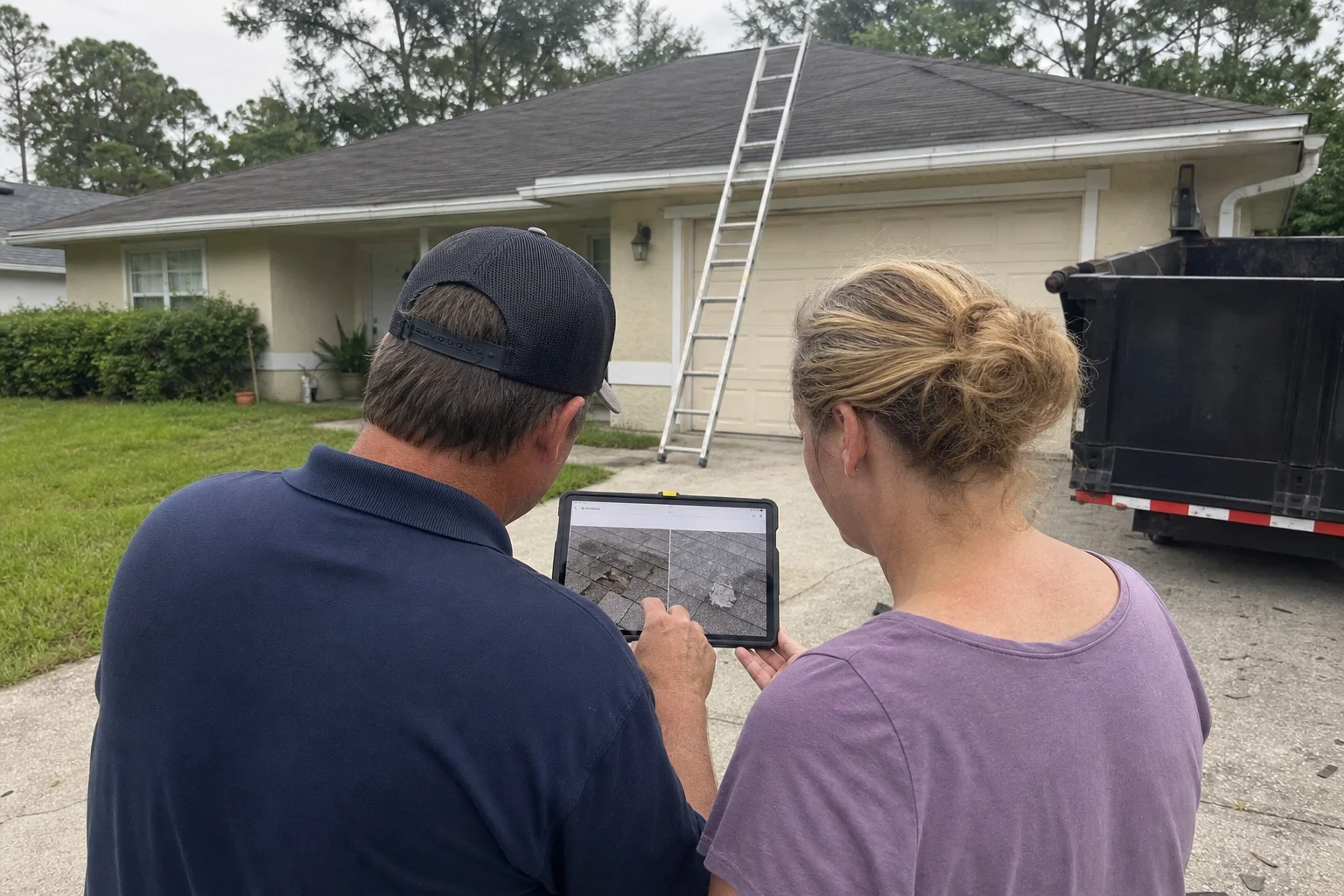
We climb the roof, check the attic from inside, take photos and measure each roof plane. The written estimate that follows breaks out every item, including our best count of decking sheets that will need replacing.
- 2
Permit, materials and a start date
We pull the permit, order materials and set a date around the forecast. In summer we start early so each section is dried in before the afternoon storms build.
- 3
Tear-off and dry-in
Tarps cover shrubs and beds, and we work one section at a time: strip it, repair the deck, lay underlayment the same day. Your home is never left open overnight.
- 4
Install, inspect and clean up
Flashing, vents and shingles go on, then the building department makes its final inspection. Many single-story homes take one to three working days, weather allowing, and we finish with a full cleanup and walk-through.
What Moves the Price of a New Roof
A roof price is the sum of a few things you can see and a few you cannot until the old shingles come off. We name each one in the estimate, so nothing on the final bill is a surprise. Financing is available if you would rather spread the cost out.
- Roof area and slope
- The number of squares we measure decides how much material gets ordered. A steep slope means harnesses, roof jacks and slower footwork, and that adds labor hours.
- What is under the shingles
- A second layer of old roofing adds tear-off time and disposal weight. Rotted plywood is priced by the sheet, and you see a photo of each one we swap out.
- Material choice
- Architectural shingles and metal panels differ in cost, lifespan and how they handle wind. We price both when you ask.
- Roof shape and penetrations
- Valleys, dormers, skylights and chimneys each need their own flashing and add labor. A simple gable roof costs less to cover than a cut-up hip roof of the same size.
- Code items and ventilation
- Re-nailing, new drip edge or added vents may be required to meet current code. These are listed as separate lines so you can see why they are there.
Roof Replacement Questions
- Is it cheaper to lay a new layer over the existing shingles?
- It saves money on day one, but we advise against it. A second layer covers up the deck so soft wood goes unrepaired, holds extra heat against the new shingles and adds weight to the framing. Stripping to the wood costs more at the start and gives the new roof a sound base with fresh flashing.
- Will my insurance pay for a new roof?
- If a storm caused the damage, it may. We work directly with your insurance adjuster on storm damage claims and provide photos of what we found. Normal wear and age are usually not covered, and we will say so plainly rather than encourage a claim that will not hold up.
- Do I need to be home while you work?
- Not the whole time. We ask that someone be there at the start to walk the property with us and at the end for the final walk-through. Expect noise inside, and it helps to take fragile items off walls near the roofline.
- What warranty comes with the work?
- Our installation carries a 5-year workmanship warranty. Should a problem trace back to the way our crew installed something, we return and repair it.
- Should I consider metal instead of shingles?
- It depends on how long you plan to stay and your budget. Metal costs more to install and lasts considerably longer, while architectural shingles cost less now. We can price both during the same estimate visit so you compare real numbers.
Find Out Whether It Is Time
We will look at your roof and attic, tell you whether repair or replacement makes sense, and put the reasons in writing. The estimate is free and carries no obligation.